

The Morning an Elephant Decided I Was Worth Looking At
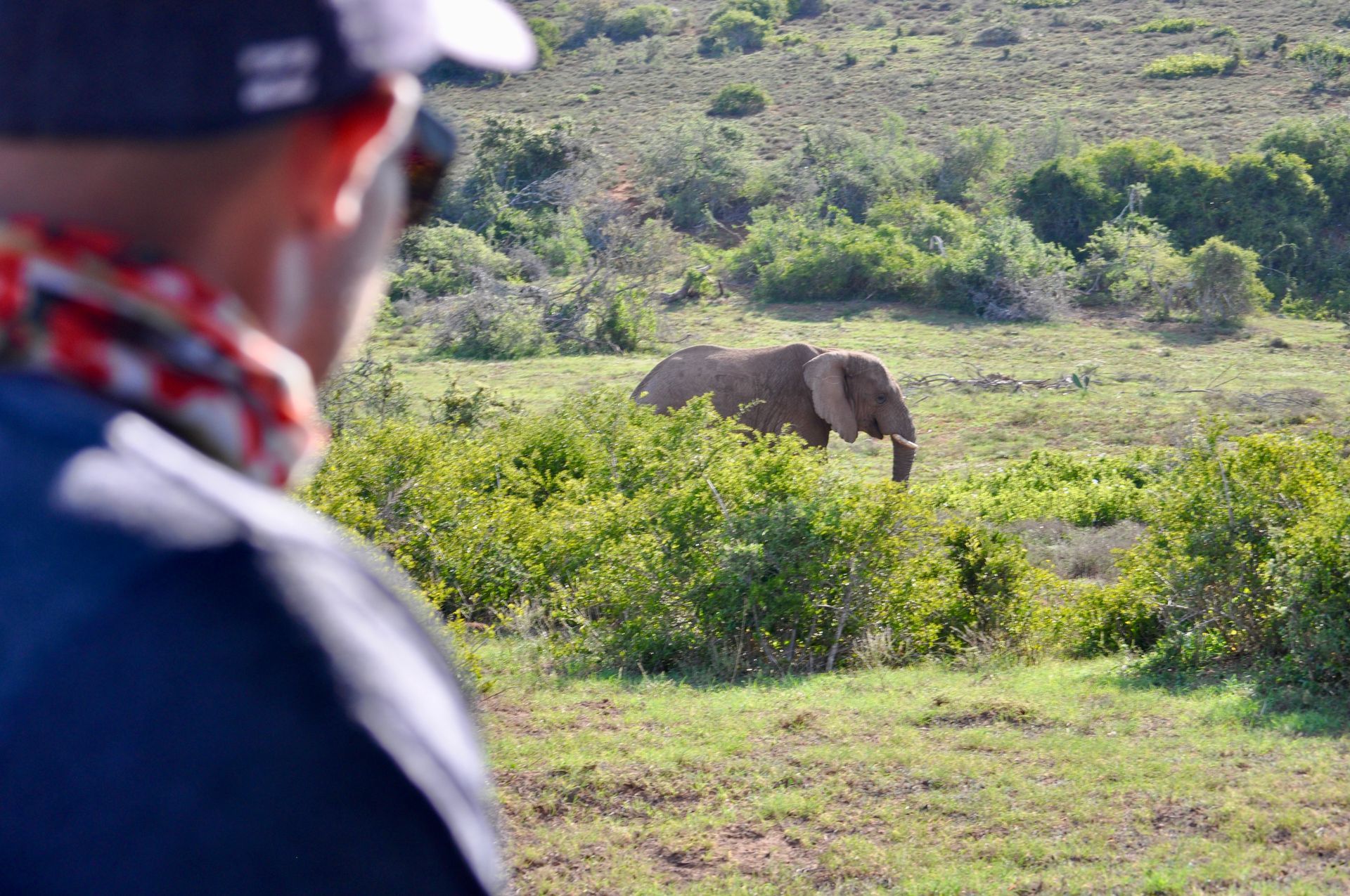
We were three minutes inside the park gates when Gary, our guide, stopped the vehicle, cut the engine, and very quietly said: "Don't move. Just watch." The bush on either side of the track was dense and dry and smelled of dust and wild sage. Nothing moved. And then — in that way that elephants have of materialising from nowhere despite being the largest land animal on earth — she appeared. A cow elephant, maybe ten metres away, moving through the scrub with an impossible silence for something that big. She glanced at us, decided we were boring, and continued about her morning.
I let out a breath I hadn't realised I'd been holding. I looked at my hands. They were shaking slightly. Not from fear — from something else entirely. From the understanding that you are, in this moment, sharing space with something ancient and wild and magnificent that owes you absolutely nothing.
Before the Bush — The Drive from Gqeberha
We'd left the city in the blue-dark of six-thirty in the morning, the streets of Gqeberha still quiet, the harbour just visible through the mist. I'd drunk a takeaway coffee in the vehicle and watched the city thin out into suburbs and then into open country. The Eastern Cape is vast and undramatic and beautiful in a way that takes time to understand — red earth, flat-topped koppies, thorn trees, the occasional farmhouse set far back from the road with its windmill turning in the morning breeze.
Gary used the drive to tell me about Addo's history. How in 1931 only eleven elephants remained in the entire Eastern Cape, hunted almost to extinction. How those eleven survivors became six hundred. I was already moved before we'd even entered the gates.
Inside the Park — The Bush Has Rules
The first thing you notice inside Addo is the density of the vegetation. This isn't the open savanna of the Serengeti. The Eastern Cape Bushveld is thick and thorny and impenetrable-looking, which makes every sighting feel earned, felt, specific. You are not watching animals from a distance across a plain. You are finding them within the bush, discovering them in the act of being wild.
Gary knew the park the way you know a favourite book — every track, every waterhole, the seasonal patterns of movement. "This time of morning," he said, turning off the main road onto a sandy track, "the lions like the eastern waterhole." He said it like it was a known fact, like reading a weather forecast. Twenty minutes later, two lionesses were lying in the long grass beside the water, watching us with the heavy-lidded patience of animals who have never once found a human interesting enough to chase.
Addo's waterholes — the bush's living room.
You are not watching animals from a distance across a plain. You are finding them within the bush, discovering them in the act of being wild.
The Elephant Again
We came back to the elephants in the late morning, when the herd had moved to a clearing near a waterhole. There were fifteen, maybe twenty of them — cows and calves and one enormous bull standing slightly apart with the particular gravity of an animal that has been around long enough to have stopped caring about most things. The calves were doing what calves do everywhere: testing the limits, getting underfoot, being corrected by their mothers with a firm but affectionate trunk to the flank.
A calf walked directly toward the vehicle, curious in the way of young things, and stopped maybe three metres away. It looked up at me with eyes that were enormous and liquid and old-seeming, even in a baby, and wrinkled its trunk experimentally. Gary smiled. "He's never seen a vehicle before," he said. "You're something new." The calf's mother appeared beside him, not concerned, just present. She looked at me with a calm assessment that I found, somehow, to be the most moving moment of the entire day. She had evaluated me. Found me acceptable. Gone back to eating.
She had evaluated me. Found me acceptable. Gone back to eating. I've never been so flattered by an elephant.
The Dung Beetle — Addo's Secret Celebrity
Gary told me to watch for dung beetles and I laughed, because we were in a Big 5 park. He was entirely serious. In Addo, vehicles must legally give way to dung beetles on the road. They move their balls of dung with a focused, absolute purpose — rolling backwards, navigating by the stars — and they are among the park's most important ecosystem engineers. I watched one for five minutes. I was completely captivated. I did not expect this about myself.
We drove out of the park in the late afternoon, the bush going golden around us, a family of warthogs trotting away into the scrub in their absurd, tails-erect way, the Addo birds roosting noisily in the thorn trees. I was tired in every good sense of the word. Not depleted — replenished. Something about spending an entire day in the presence of wild animals that have been given the space to simply be what they are does something to you that I can't fully explain. You remember, perhaps, that the world is larger and older and more various than your daily routine suggests.
Book your Addo Elephant Safari at www.intotours.co.za or WhatsApp +27 60 986 7612.