

Bush at Dawn, Wine Before Noon — How Is This a Half Day?
From the open bush to the open cellar — one extraordinary morning.
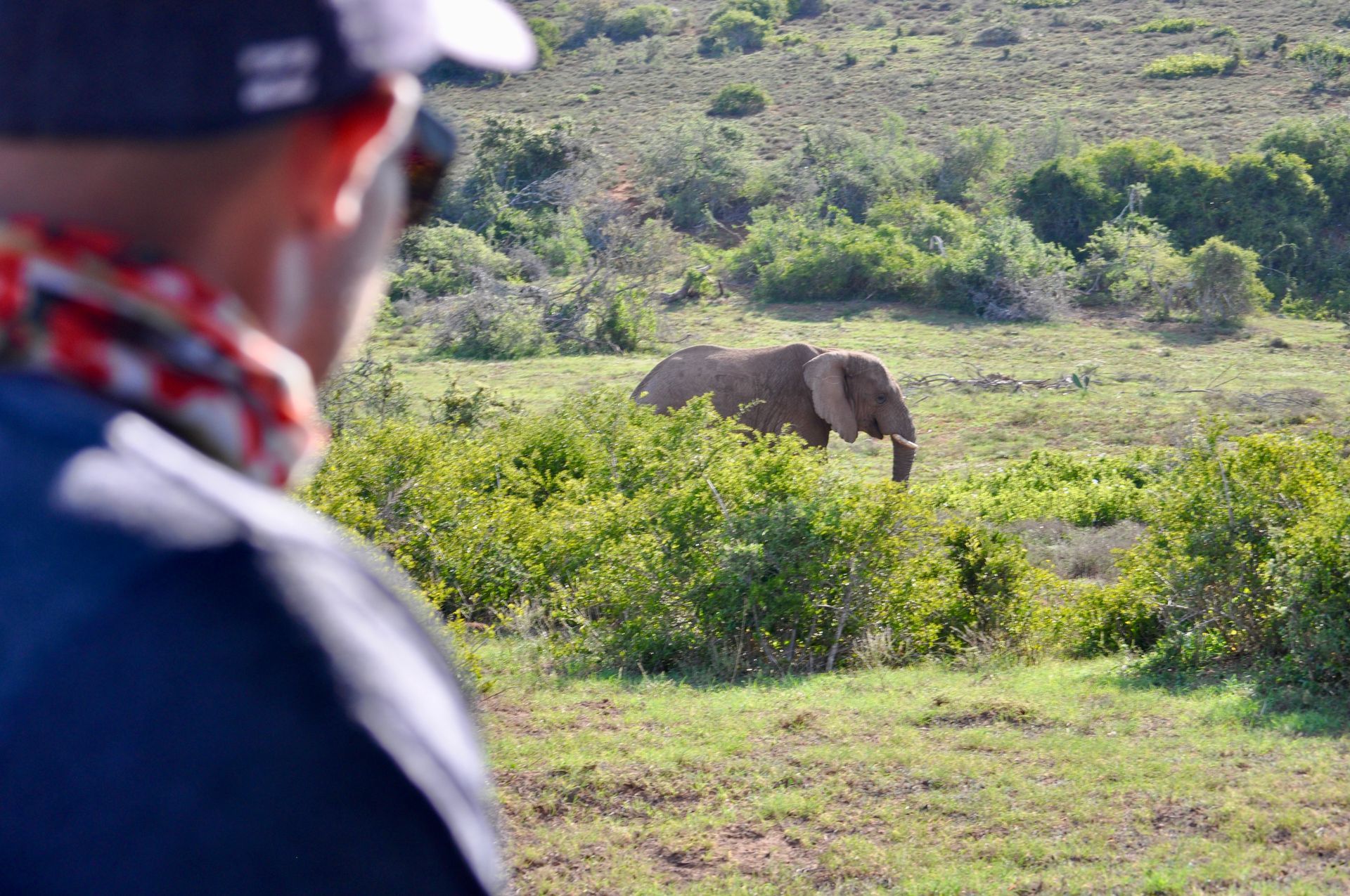
The thing nobody tells you about a sunrise game drive is what the cold is like. Not unpleasant cold — revelatory cold. The kind that makes the air feel new, that makes the bush smell sharper, that means you pull the blanket they gave you at the start tighter around your shoulders and watch the sky go from deep navy to violet to the specific shade of orange that exists only in the ten minutes before the sun actually appears. The driver — Shaheedah, who has the eyes of someone who has been doing this for years and the quiet enthusiasm of someone who has never quite gotten used to it — lifted her hand: stop.
We stopped. The bush on either side of the track was absolutely still. And then, twenty metres away in the grey pre-dawn, a shape resolved itself from the scrub: a rhino, moving through the acacia with a deliberate, ancient slowness, its horn cutting a silhouette against the brightening sky. Nobody spoke. The cold air carried the smell of dew on dry grass and something animal, something specific. We watched until it disappeared back into the bush. Shaheedah turned to us and smiled. "Good morning," she said. And it genuinely was.
The Bush Wakes Up
There's a sequence to a game drive dawn that I didn't know before that morning. First the birds — not dawn chorus in the garden-bird sense, but the sudden, overlapping noise of hundreds of species beginning their day at once. Then the light, coming from below the horizon before the sun, turning the sky to something between amber and rose. Then the animals, moving from their night positions to their day ones, crossing roads, visiting waterholes, being briefly visible before the day absorbs them.
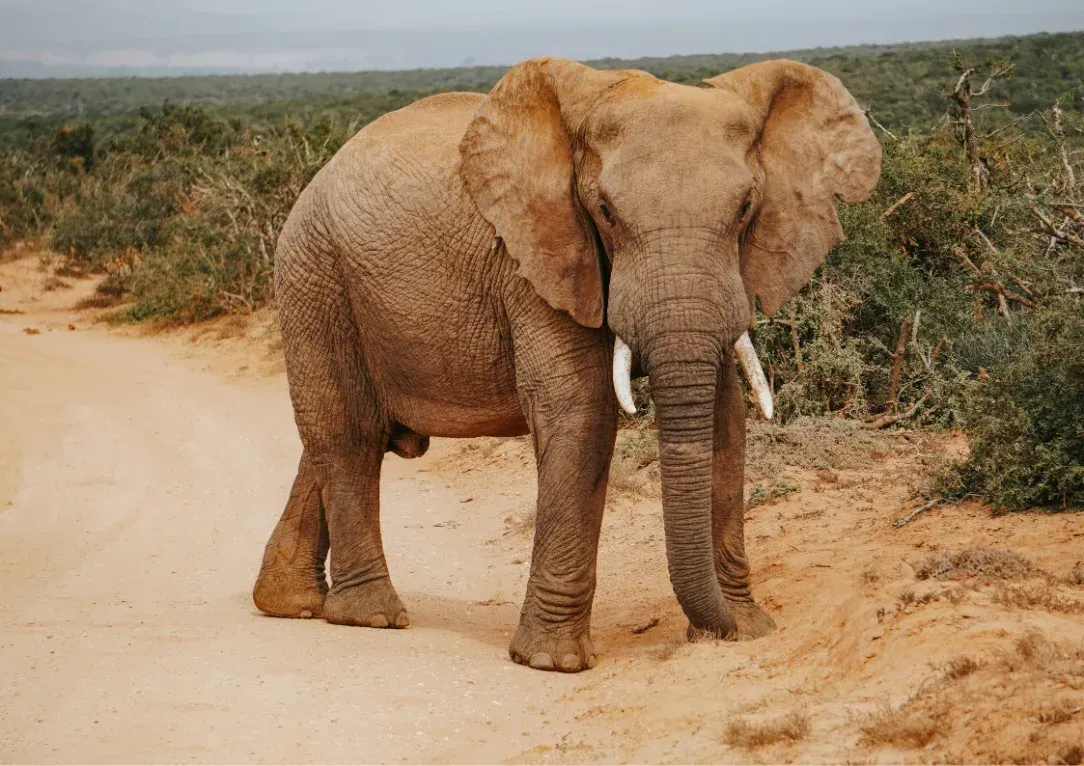
We found zebra at a waterhole, their reflections perfect in the still water, drinking in the morning quiet. Giraffe on a ridge, their heads above the treeline, watching the horizon with that long-sighted, slightly aristocratic gaze. A family of impala crossing the road at a trot — a collective shimmer of rust and white and liquid movement. Shaheedah knew where to look and when, reading the bush the way musicians read a score — seeing not just what was there but what was about to happen.
The Transition — From Wildness to Winelands
Here is the part that stays with me most: the transition. We drove back through the farm gates with the morning still early, the light now full and warm, the bush singing behind us. Within the hour, we were on the wine route, the landscape changing completely — from wild acacia scrub to cultivated vineyards, from red dust to gravel lanes between vine rows, from the smell of earth and animal to something different but equally intoxicating: the smell of a wine estate in late morning, when the cellars are warm and the grapes are being tended and the whole valley seems to breathe.
I thought the contrast would feel abrupt, jarring. It didn't. It felt like a complete sentence. Africa speaking in two voices on the same morning: the ancient wild and the ancient cultivated, the elephant trail and the wine cellar, the open savanna and the mountain-framed vineyard. Both were South Africa. Both were true.
The Wine — After the Bush, Everything Tastes Different
I don't know whether it was the early start, or the cold air, or the accumulated sensory richness of the morning, but the wine at Stellenbosch tasted different to any wine I'd had before. Not better, necessarily, though it was exceptional — but more present. More arrived-at.
We sat in the tasting room — cool stone, dark beams — and the winemaker talked us through a flight of five wines with the kind of quiet authority that comes from decades of attention to a specific patch of earth. A Viognier with the smell of stone fruit and white flowers. A Cabernet Franc with a pencil-shaving, blackcurrant complexity that made me put my glass down and think.
"This vine," the winemaker said, gesturing out toward the vineyard visible through the window, "is sixty years old. The older the vine, the less fruit it produces. What it does produce, it puts everything into. You can taste the concentration." I picked up my glass again. I tasted it. She was right. You could.
Sixty-year-old vines — the older the vine, the deeper the wine.
Both were South Africa. Both were true. The elephant trail and the wine cellar, the open savanna and the mountain-framed vineyard — one morning, one sentence.
Back to Cape Town
We were back in the city by one o'clock. One o'clock. It felt impossible that it was still the same day. I sat at lunch — a long, slow lunch that the morning seemed to demand — and tried to account for the hours: pre-dawn cold on a game vehicle, rhinos and zebra and giraffe, dawn breaking over the African bush, and then vines in sunlight and cool stone cellars and sixty-year-old Cabernet Franc and an estate dog sleeping in a doorway.
One morning. One half day. South Africa, in two extraordinary voices. Some places give themselves slowly. This country gives itself all at once, before you're ready, and then you spend the rest of your trip trying to catch up.
Book your Cape Town Safari & Stellenbosch Wine Tour at www.intotours.co.za or WhatsApp +27 60 986 7612.